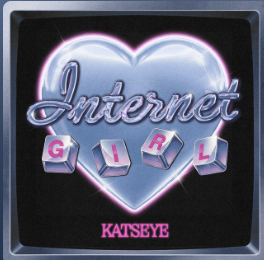
A widely-circulated NPR feature published April 27, 2026 has reignited one of K-pop's most uncomfortable conversations: the mental and physical cost the idol system extracts from the young performers it produces. Profiling Katseye alongside indie-pop artist Tiffany Day and hyperpop act Slayyyter, the piece — titled in reference to burnout across the pop machine — frames K-pop idol burnout not as an edge case but as a structural feature of an industry now actively replicating itself in Western markets. For fans of Katseye in particular, the timing carries unmistakable resonance: member Manon Bannerman stepped back from the group in February 2026, citing her personal health and wellbeing.
THE IDOL SYSTEM'S ARCHITECTURE OF CONTROL
The conditions NPR describes are not new disclosures — they are documented features of how major Korean entertainment companies have long operated. Trainees as young as twelve enter programs that can run to 15-hour days of vocal, dance, and performance coaching. Phones are monitored or restricted. Personal relationships are prohibited or heavily discouraged. Trainee periods — which can stretch for years — go unpaid. Enforced dietary regimens, often severe, are standard. Former trainees and debuted idols have spoken about these conditions in documentaries, court filings, and social media posts going back more than a decade.
What has changed is the scale of the conversation and the seniority of the voices now participating in it. Mental health crises within the industry — including high-profile cases of burnout, depression, and suicide — have accumulated to a point where they can no longer be absorbed as isolated incidents. The question the NPR piece presses is whether the global expansion of the K-pop industrial model is exporting these conditions wholesale, or whether the new markets and new groups represent a genuine structural departure.
KATSEYE AND K-POP IDOL BURNOUT: A FRANCHISE ABROAD
NPR describes Katseye as "the first successful attempt to repackage Seoul's star machinery and franchise it abroad." Formed through the HYBE-Geffen Records co-production Dream Academy — a globally broadcast survival competition — the group drew on the established K-pop audition-and-training pipeline while recruiting members from outside South Korea. The six members who debuted in 2024 came from the United States, Switzerland, the Philippines, South Korea, and beyond. The stated premise was a new model: K-pop's production rigor applied to a group positioned explicitly for Western pop crossover.
Whether that framing holds in practice is precisely what the NPR piece interrogates. The infrastructure underlying Dream Academy — the months of intensive pre-debut training, the corporate oversight, the image management, the packed promotional schedules — reflects the same priorities that define Seoul's major agencies. Transplanting the machine to Los Angeles or distributing it across international borders does not automatically change what the machine demands of the people inside it. Several former Dream Academy participants who were eliminated before debut have spoken publicly about the emotional and physical difficulty of the process.
MANON BANNERMAN'S HIATUS AND WHAT IT LEAVES UNSAID
On February 20, 2026, HYBE and Geffen Records announced that Katseye member Manon Bannerman would be taking a temporary hiatus to focus on her personal health and wellbeing. No additional details were provided by the label, and neither Manon nor the remaining members have elaborated publicly. Katseye have continued as a five-member group — performing at Lollapalooza dates across South America in March and debuting "Pinky Up" at Coachella in April. The NPR profile was published two months after that announcement.
It would be inaccurate to read Manon's hiatus through the lens of the NPR piece or to draw causal connections not supported by any public statement. What is true is that her absence prompted exactly the kind of fan and media scrutiny that the article describes as newly normalized: the expectation that idols be publicly legible, that their health and private lives be accounted for, and that labels provide transparency that the industry has historically resisted offering. The conversation around Manon — careful, concerned, persistent — is itself evidence of a shift in what audiences now demand.
FIFTH-GENERATION GROUPS AND THE QUESTION OF REFORM
The NPR feature arrives during a period when the K-pop industry is actively marketing its fifth-generation groups — including Katseye, ILLIT, and several HYBE and SM Entertainment acts — as representing a new era. The language of that marketing leans on authenticity: members who write their own music, who engage directly with fans on social media, who are allowed visible personalities rather than the carefully managed archetypes of earlier generations. Industry insiders and critics have debated whether these changes reflect substantive reform or rebranding. The structural conditions — the training timelines, the contractual obligations, the pressure to maintain physical standards — have not been publicly addressed by the major companies in any systematic way.
Tiffany Day and Slayyyter's inclusion in the NPR piece is significant precisely because it decouples the conversation from K-pop specifically. Both are Western artists operating in major-label pop ecosystems that impose their own versions of control — image management, release calendars, social media performance — without the particular cultural scaffolding of the Korean idol system. The burnout being described is industry-wide, and the mechanisms vary in degree rather than in kind. For Katseye, positioned explicitly at the intersection of both worlds, that overlap has always been the operating condition.
FAN COMMUNITIES AND THE DEMAND FOR ACCOUNTABILITY
The NPR story landed widely — carried across affiliate stations and shared extensively in K-pop fan spaces on X, Reddit, and fan forums. The response in those communities has been notably less defensive than similar stories prompted even two or three years ago. Conversations that once sorted quickly into fandom protectiveness — "don't make our group look bad" — have increasingly given way to more granular engagement with the conditions described. Fans organizing around specific groups now regularly track member health disclosures, push back on excessive event scheduling, and call publicly on labels to reduce promotional workloads after members show visible signs of exhaustion.
Whether that fan pressure translates into material change inside companies that operate with limited external accountability remains genuinely unclear. But the shape of the conversation has changed. The NPR piece is read not as an attack on K-pop but as a fair accounting of conditions that many fans have long known about and struggled to discuss openly within communities structured around celebration. That shift in tone — from defensiveness to engagement — may be the most meaningful development the article documents.
Frequently Asked Questions
K-Pop Group Profiles